Brussels has its quirks. You head out early in the morning and walk through the streets of the Belgian capital, never quite certain that you have chosen the right clothes for the sun, clouds and cool wind taking turns in the sky.
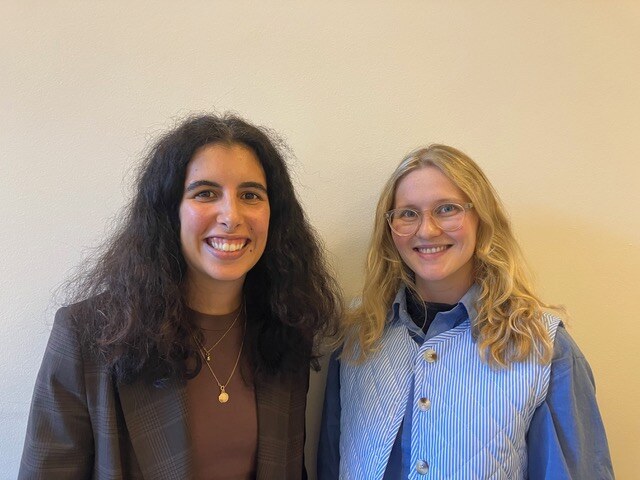
Yet any feeling of cold quickly disappeared on arrival at the European Association for the Education of Adults (EAEA), where hosts Charlotte Ede and Maria Gonçalves welcomed the JUDO4LLC partners with smiles and warmth. This, too, is Brussels: uncertain weather, but a reassuring confidence in human relationships.
The project’s second transnational meeting took place on 29 and 30 October 2026 in a lively and collaborative atmosphere. Practical activities gave participants hands-on experiences, including their first encounter with the online platform that will host sharing and learning activities among judoka, clubs, associations and members of local communities.
At the end of the meeting, Carlos V. Ribeiro spoke with the two hosts about the previous days’ work and the connection between sport, lifelong learning and community action.
How would you assess the working sessions completed by the JUDO4LLC partners?
Charlotte Ede: At EAEA, we work primarily in the field of lifelong learning. This experience within Erasmus+ Sport is therefore new to us and represents a major challenge.
To participate in this project, we need to learn a great deal about judo and the organisations and experiences associated with the sport. It is an excellent opportunity for us as a European association, and at this meeting we were able to go further in pursuing the objectives we had set ourselves.
We are very pleased with the outcomes of the meeting and with the development of the working tools that were presented and worked on collectively.
Was there anything you would highlight about the collaborative work between partners?
Maria Gonçalves: I particularly appreciated the activity that encouraged us to reflect on the future. It is very interesting to look at current projects while imagining their impact on our future lives.
We sketched out a likely scenario for how the project would operate several years down the line, while still working on it, and then returned to the present to assess whether we are working towards what we imagined would be particularly positive in the future.
There is a powerful idea at the heart of this exercise: the possibility of changing the future through present-day actions. Given how much of our day-to-day activity is carried out on autopilot, we can forget to think about what we are doing — not just the “how”, but also, and above all, the “what for”. This is a central and important issue in our project work.
How does a sport-related project fit into EAEA’s broader work?
Charlotte Ede: This is something we have been reflecting on. The idea of organising learning activities outside the club — not limiting activities to the tatami, and seeking to involve communities — fits perfectly with lifelong learning and non-formal education.
Sport encourages approaches to learning that relate to basic and fundamental skills, in a flexible environment with a very promising relationship between the individual and the group. This connection between sport and EAEA’s mission makes perfect sense.
Can sport support EAEA’s call to extend adult education to all areas of life?
Maria Gonçalves: Absolutely. It was an issue we discussed in depth when drawing up the EAEA Manifesto. Here, judo is just one example.
In both theory and practice, developing local approaches to lifelong learning must be based on the idea that each sport should consider its potential both within and beyond its sporting context. This is where the idea of community comes in, an idea that is very prominent in our Manifesto.
It is a holistic view of the person and their context, rather than one focused solely on the training sessions and competitions that define traditional sporting activity. We can therefore say that judo still has much more to offer our future work.
The interview was conducted and written in Portuguese by Carlos V. Ribeiro of Qantara Sports and adapted into English for the JUDO4LLC website.